Boiler Services
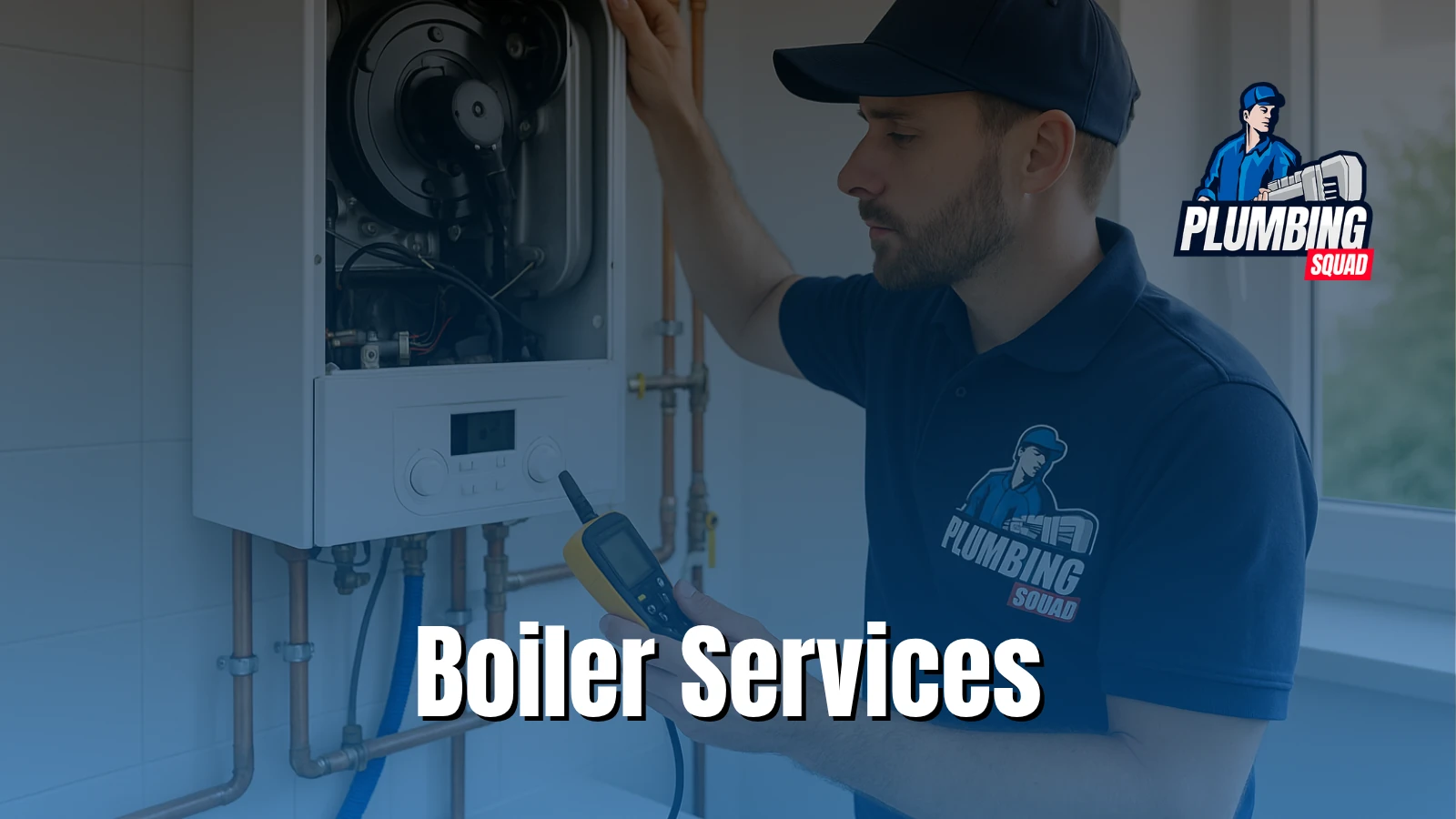
Boiler Services
Scope of Work


Boiler Services
FAQs
Find quick answers to the most common questions about our plumbing services. These FAQs cover what to expect, service details, and helpful tips to make scheduling easier.
First we verify power, fuel supply (gas pressure at manifold or oil delivery), and thermostat call-for-heat. From there our techs run the boiler-side diagnostics: ignition control board, flame sensor, gas valve operation, circulator function, low-water cutoff status, and aquastat settings. For combi-boilers we also check the DHW heat exchanger and flow sensor. Most no-heat calls trace to ignition (flame rod, igniter, board), circulator failure, or sensor faults — all repairable same-day with common parts. Call (866) 324-9553 when you lose heat in winter; we run 24/7.
We size by actual heat load — not just nameplate replacement of whatever was there before. A Manual J calculation accounts for the building envelope (insulation, windows, square footage, air infiltration), the radiation system (cast iron, baseboard, panel radiators, in-floor PEX), and any DHW demand if it's a combi. Many existing California boilers are oversized by 30–50% because they were rule-of-thumb-sized in the 70s-90s. Right-sizing increases efficiency, extends component life, and improves comfort by reducing short-cycling.
Noisy hydronic systems usually mean one of three things: trapped air (knocking, gurgling), excessive flow velocity (whooshing or whistling), or pipe expansion/contraction issues (creaking and ticking). The fix order is to bleed every radiator at the top vent until water flows clean, then balance flow at each circuit valve to even out distribution, and finally check that hangers and supports aren't pinching pipes during thermal expansion. Cavitating circulators (gargling sound) usually mean low system pressure or a sticking pressure-reducing valve.
Yes — Navien, Rinnai, Bosch, Bradford White, Noritz, Takagi combis are routine work for Plumbing Squad. The annual maintenance protocol is descaling the DHW heat exchanger (vinegar or descaler circulation), cleaning the flame rod and burner, checking flue/combustion air paths, verifying gas pressure under load, and updating control settings. In SoCal's hard-water regions descaling every 12 months is non-negotiable — skip it and the heat exchanger plates restrict, efficiency drops 15-25%, and the unit will lockout on overheat codes.