Sink Repair & Installation
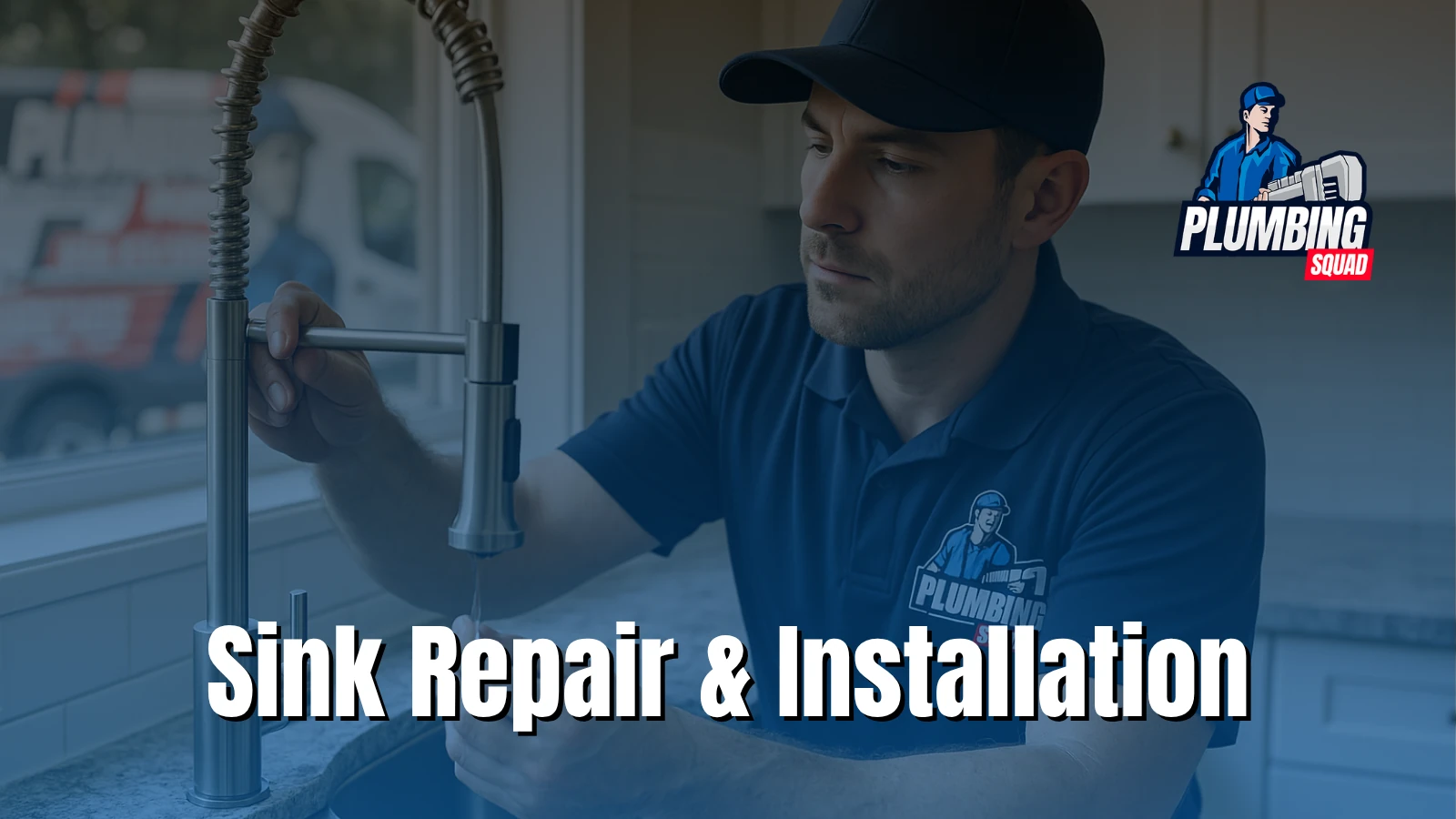
Sink Repair & Installation
Scope of Work


Sink Repair & Installation
FAQs
Find quick answers to the most common questions about our plumbing services. These FAQs cover what to expect, service details, and helpful tips to make scheduling easier.
Yes — undermount sinks on stone, quartz, or solid-surface countertops are standard installation work. The hold is mechanical (sink clips epoxied or threaded into the bottom of the countertop) combined with a continuous silicone sealant bead at the rim. For heavy sinks (cast iron, fireclay, single-bowl 30"+ stainless) we add support brackets to the cabinet to bear the weight. We coordinate with the stone fabricator or cabinet maker if any cutout adjustment is needed.
Sink odors come from biofilm in the drain assembly or P-trap, food and grease residue in the basket strainer area, or dry P-trap (rare in active sinks but common in vacation homes or rarely-used guest baths). We pull and clean the trap, scrub the strainer assembly with an enzyme cleaner, and run a deep flush. For persistent odors we check the vent — a partially clogged vent can pull sewer gas backward into the trap.
Low flow is usually one of three things: clogged aerator (mineral buildup, very common in LA/OC hard water), supply-line restriction (kinked stop valve, sediment in supply line), or low system pressure. We start with the aerator — pull, soak in vinegar overnight, reinstall — that fixes 60-70% of low-flow complaints. If still slow, we test inlet pressure at the angle stop, then trace back to the main if needed.
Yes — relocating a kitchen or bathroom sink to a new location requires re-routing supply, drain, and vent. The drain reroute is the most constrained — proper slope (1/4" per foot for 2" drain), proper venting (typically a wet vent or AAV), and compatible tie-in to the existing stack. Plumbing Squad's CSLB #1081283 covers permitted work. We pull permits, coordinate inspections, and ensure code compliance for any sink relocation.